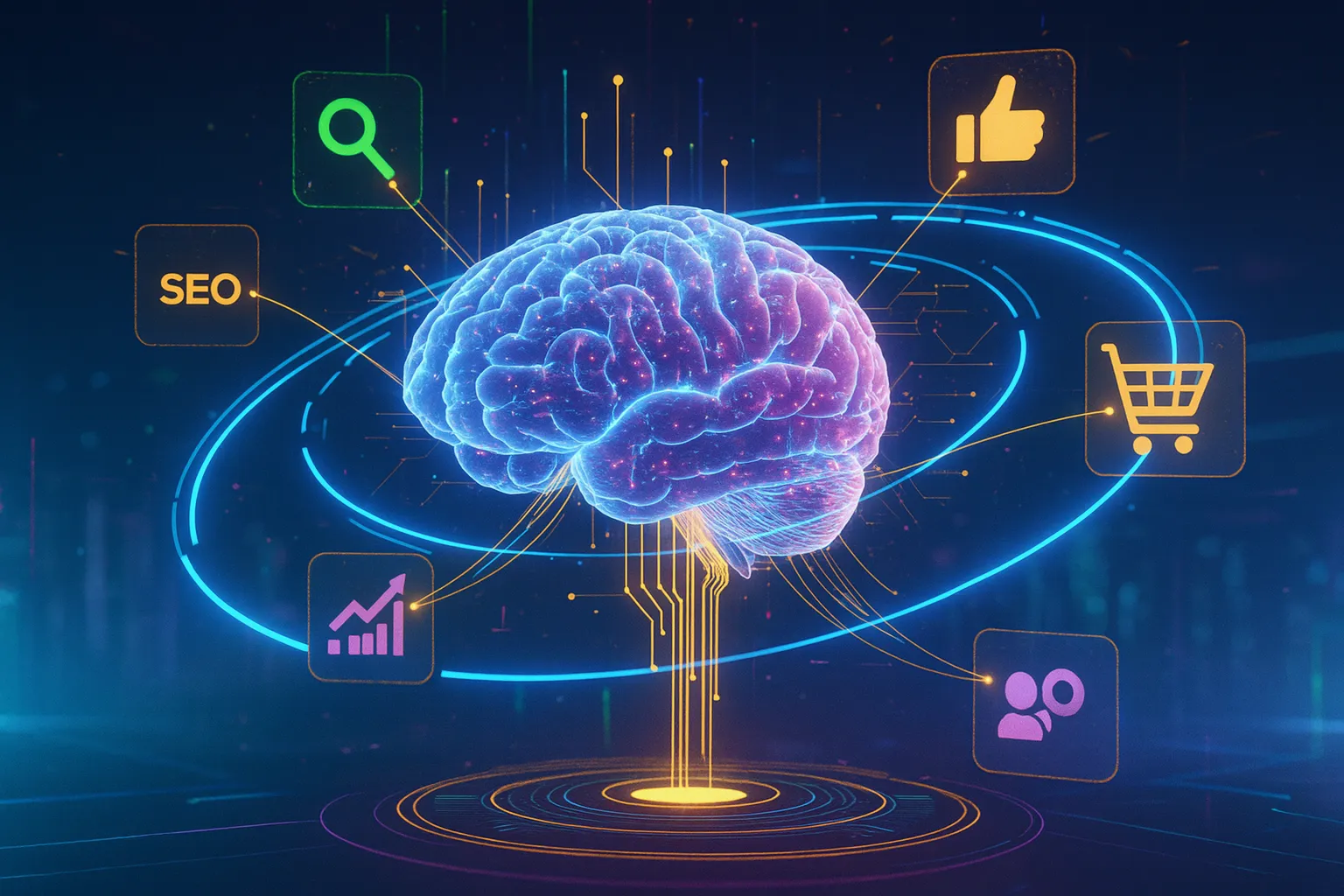
Artificial Intelligence (AI) and Machine Learning (ML) are some of the most discussed technologies in the modern digital space. AI and machine learning are transforming how businesses are conducted, whether it be in the form of personal assistants such as Siri and Alexa or even in marketing automation tools. However, what is the distinction between AI and ML? And what can digital marketers do to capitalize on these technologies to grow? In this beginner's guide, we will break down AI and machine learning in simple terms, explore AI vs ML for business, and show how machine learning for marketers can transform strategies.
What Is AI?
Artificial Intelligence (AI) is the simulation of human intellect in machines. Basically, AI allows machines to do jobs that typically demand human intelligence, such as language comprehension, image recognition, decision-making, or experience-driven learning.
Common examples of AI:
- Chatbots and virtual assistants
- Recommendation systems on e-commerce sites
- Fraud detection in banking
- Autonomous vehicles
AI is gaining popularity in marketing as a tool to enhance customer behavior, optimize campaigns, and deliver personalized experiences.
What Is Machine Learning?
Machine Learning is a subset of AI that allows systems to learn from data without being explicitly programmed. Algorithms find patterns in large datasets to make predictions or decisions.
Examples of Machine Learning include:
- Email spam filters
- Predictive analytics in marketing
- Product recommendation engines
- Image and speech recognition
In short, ML is the part of AI that keeps getting smarter over time.
| Aspect | Artificial Intelligence (AI) | Machine Learning (ML) |
|---|---|---|
| Definition | Broad tech enabling machines to mimic human intelligence | Subset of AI focused on learning from data |
| Goal | Simulate human decision-making and problem-solving | Learn patterns to make predictions/decisions |
| Examples | Chatbots, self-driving cars, voice assistants | Spam filters, recommendations, predictive analytics |
| Application | Can be rule-based or learning-based | Always learning-based; cannot exist outside AI |
| Flexibility | Rules or learning | Learning only |
Explaining AI vs Machine Learning in Simple Terms
Consider AI as a looser definition of building smart machines. On the other end is machine learning which is the process through which these machines gain more intelligence by learning through experience.
Here’s an analogy:
- AI is like building a robot that can cook.
- ML is teaching that robot to improve its recipes every time it cooks, based on feedback.
This simple analogy helps answer questions like:
- Explain AI vs machine learning simply.
- Is machine learning a type of AI for marketing? Yes, it is.
AI vs ML for Business
Companies in all industries are using AI and ML to enhance efficiency and cost minimization and customer experience. This is an example of how AI vs ML can make a difference in your business:
1. AI in Business
- Customer service: AI-powered chatbots provide instant responses to queries.
- Decision support: AI systems analyze data to recommend strategies.
- Automation: Repetitive tasks like invoice processing or report generation are automated.
2. Machine Learning in Business
- Predictive analytics: ML predicts customer behavior, purchase patterns, and sales trends.
- Personalization: ML algorithms recommend products and content to users based on past interactions.
- Marketing insights: Find patterns and optimize ad targeting.
For digital marketers, machine learning for marketers is a game-changer. It allows them to conduct smarter campaigns, segment audiences, and get the highest ROI.
AI vs Machine Learning for a Digital Marketer
One area in which AI and ML are having a massive influence is in digital marketing. Understanding AI vs machine learning for a digital marketer helps in choosing the right tools and strategies.
Applications of AI in Digital Marketing
- AI chatbots for 24/7 customer support.
- AI-based content creation and curation.
- AI-powered ad optimization
Applications of Machine Learning in Digital Marketing
- Predicting customer lifetime value
- Personalized email campaigns
- Audience segmentation by behavior
- Product recommendations and upsells
By using machine learning vs AI in simple terms, marketers can see that AI provides the framework for intelligent systems, while ML allows these systems to continuously improve performance using data.
Machine Learning vs AI in Simple Terms for Marketing
To simplify further:
- AI: The brain behind smart marketing tools.
- ML: The learning process that makes these tools smarter over time.
For example:
- An AI-powered recommendation engine suggests products.
- ML analyzes past purchase behavior and improves the recommendation over time.
This distinction helps answer common questions like:
- What is the difference between AI and ML in digital marketing?
- Explain AI vs machine learning simply.
Benefits of Using AI & ML in Marketing
- Personalization at scale: Deliver tailored content to millions of users.
- Predictive insights: Anticipate customer behavior to improve campaigns.
- Cost efficiency: Automate repetitive tasks and optimize ad spend.
- Better experiences: AI chatbots provide instant, accurate responses.
- Smarter decisions: Data-driven insights from ML models guide strategy.
Challenges of AI & ML in Marketing
While AI and ML are powerful, there are challenges to consider:
- Data quality: Poor data leads to inaccurate predictions.
- Complexity: Implementing AI/ML tools requires technical expertise.
- Privacy: Collecting and using user data must comply with regulations.
- Over-reliance: Marketers must balance automation with human intuition.
How to Get Started With AI and Machine Learning in Marketing
- Start small: Use AI tools for email marketing, social media, or ad targeting.
- Collect quality data: Clean, relevant data is key to ML success.
- Test & iterate: Run small experiments and refine strategies based on ML insights.
- Integrate tools: Use AI for content suggestions, chatbots, or analytics dashboards.
- Educate the team: Ensure marketers understand AI vs ML and how it applies to campaigns.
Conclusion
AI and ML are taking over digital marketing and business activity. By understanding AI and machine learning differences, digital marketers can leverage these technologies for personalized experiences, predictive insights, and improved ROI.
Remember:
- AI is the broader concept of machines performing intelligent tasks.
- Machine learning is a subset of AI that learns and improves from data.
- For marketers, both AI and ML provide actionable insights, automation, and smarter decision-making.
Whether you're new to AI or looking to enhance your digital marketing strategy, understanding AI vs machine learning for a digital marketer is the first step toward a smarter, data-driven future.
This article covers Understanding AI and Machine Learning: A Beginner’s Guide and explains practical ideas for business growth.
Business owners, marketing teams and decision-makers who want clearer digital strategy can use this guide.